
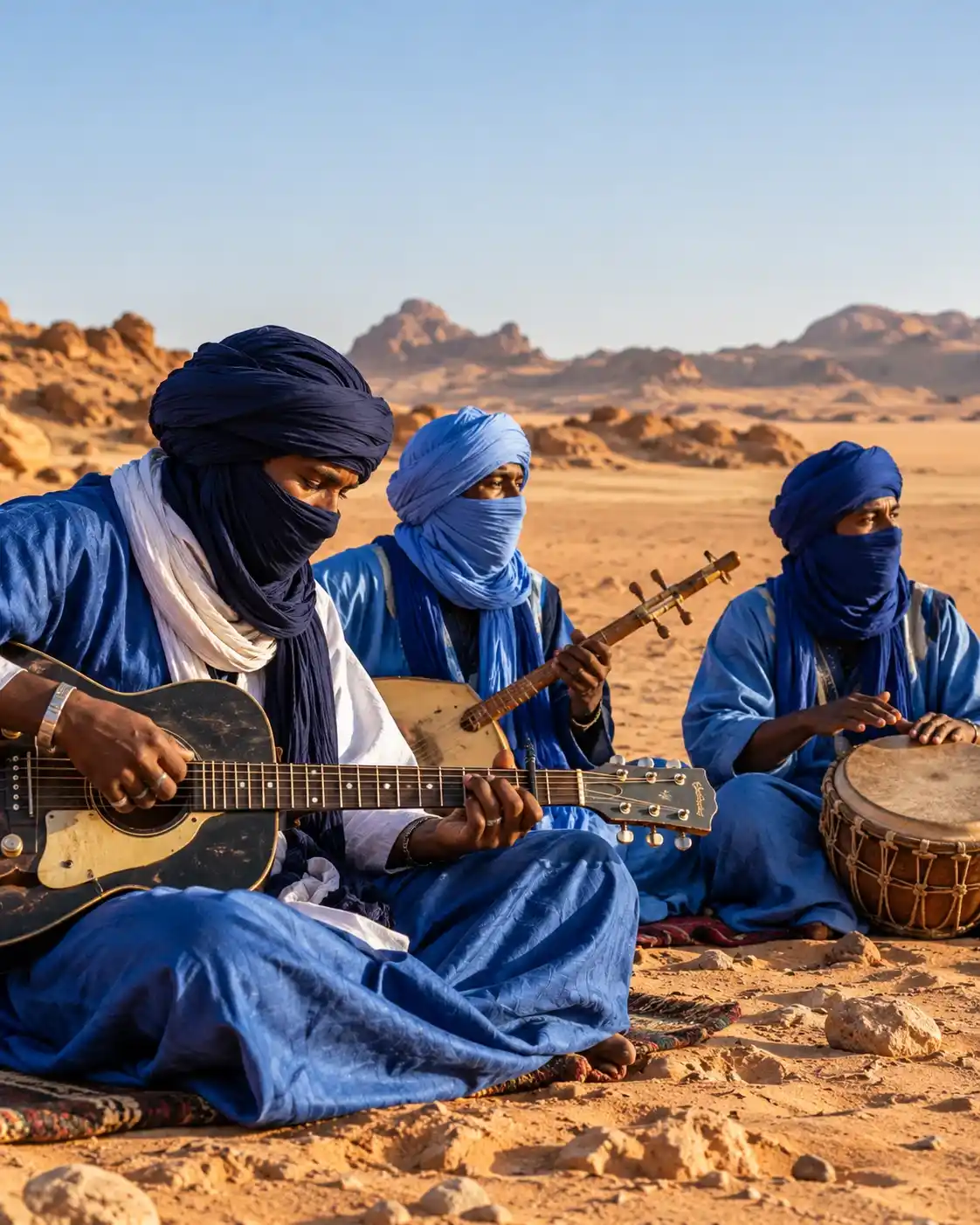
Rhythms of the Sahara: Tuareg Nomads’ Desert Blues
What happens when the silence of the Sahara meets the raw pulse of an electric guitar? The Tuareg answer with Desert Blues, a sound born from the desert and carried across generations.
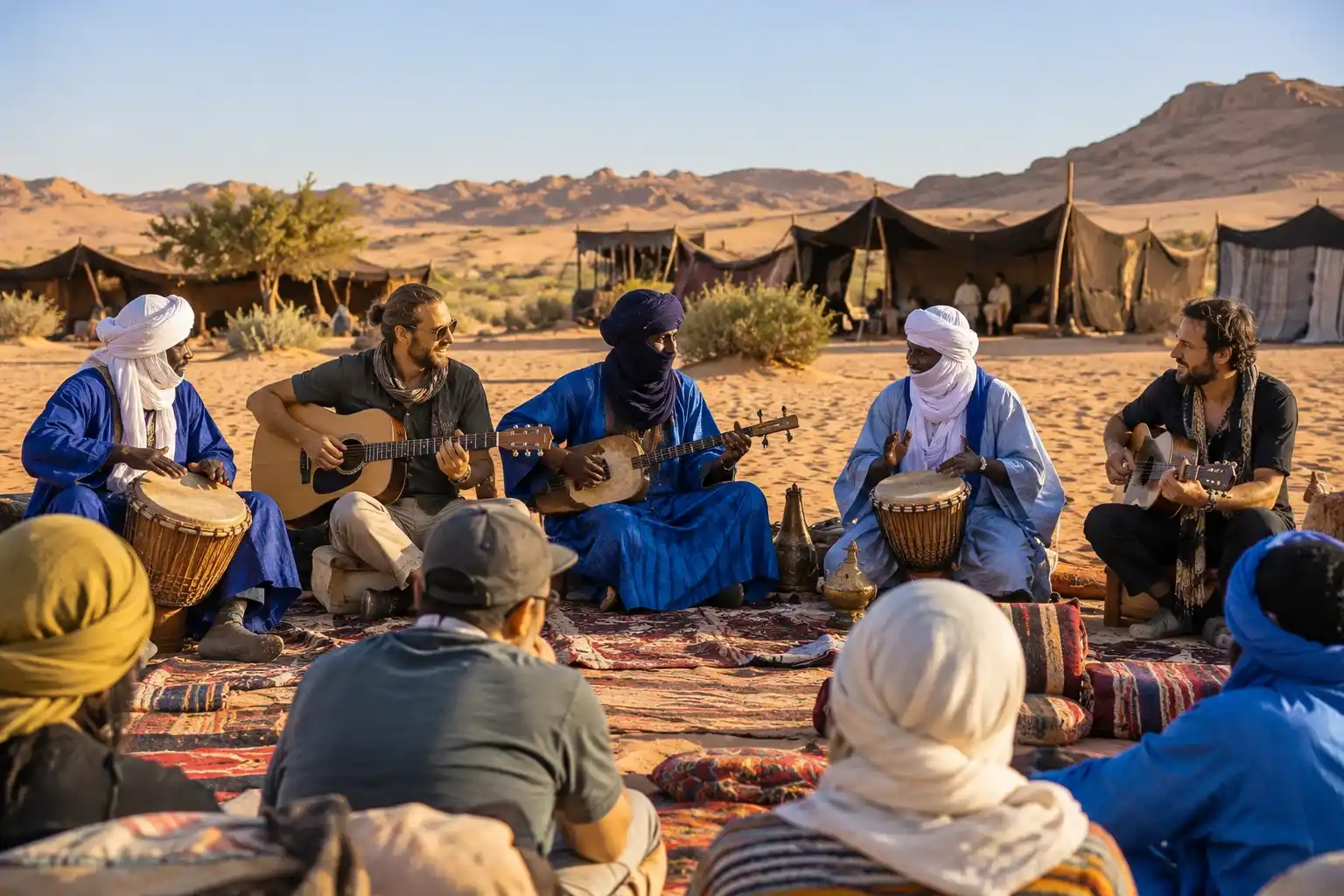
The vast expanse of the Sahara Desert, with its shifting dunes and timeless landscapes, echoes not only with the whispers of the wind but also with the soul-stirring melodies of the Tuareg nomads. In the heart of North Africa, where the horizon seems endless, the Tuareg people have crafted a musical tradition known as the Desert Blues, a genre that resonates with the spirit of the Sahara itself.
Origins of the Desert Blues
The Desert Blues, or Tishoumaren in the Tuareg language, is a musical genre that came from the nomadic life of the Tuareg people. Rooted in their oral traditions and passed down through generations, the music reflects the beauty of the desert. It serves as a medium for storytelling, a way to share the tales of the Tuareg’s nomadic existence, their struggles and their connection to the vast and unforgiving Sahara.
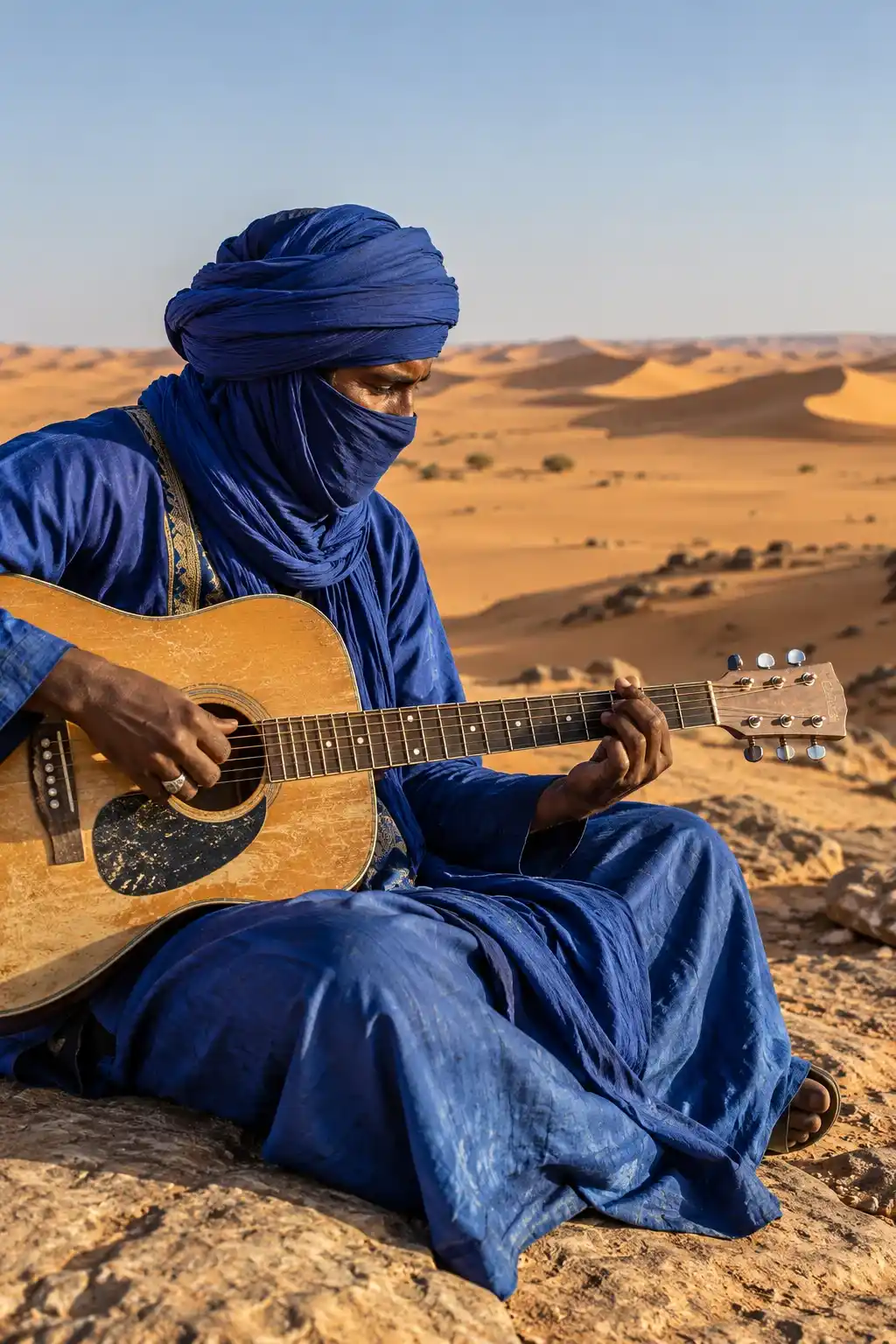
Instruments That Create the Melody
At the heart of the Desert Blues are traditional instruments that have been a companion to the Tuareg for centuries. The tinde, a drum made from a hollowed-out tree trunk and covered with stretched animal skin, sets the rhythmic foundation. The haunting melodies are created through the strings of the imzad, a single-stringed fiddle played by Tuareg women, creating an emotional depth that mirrors the ebb and flow of desert life. This musical heritage forms part of a wider Tuareg tradition of craftsmanship and artistic expression, also reflected in the intricate silverwork created by Saharan silversmiths.
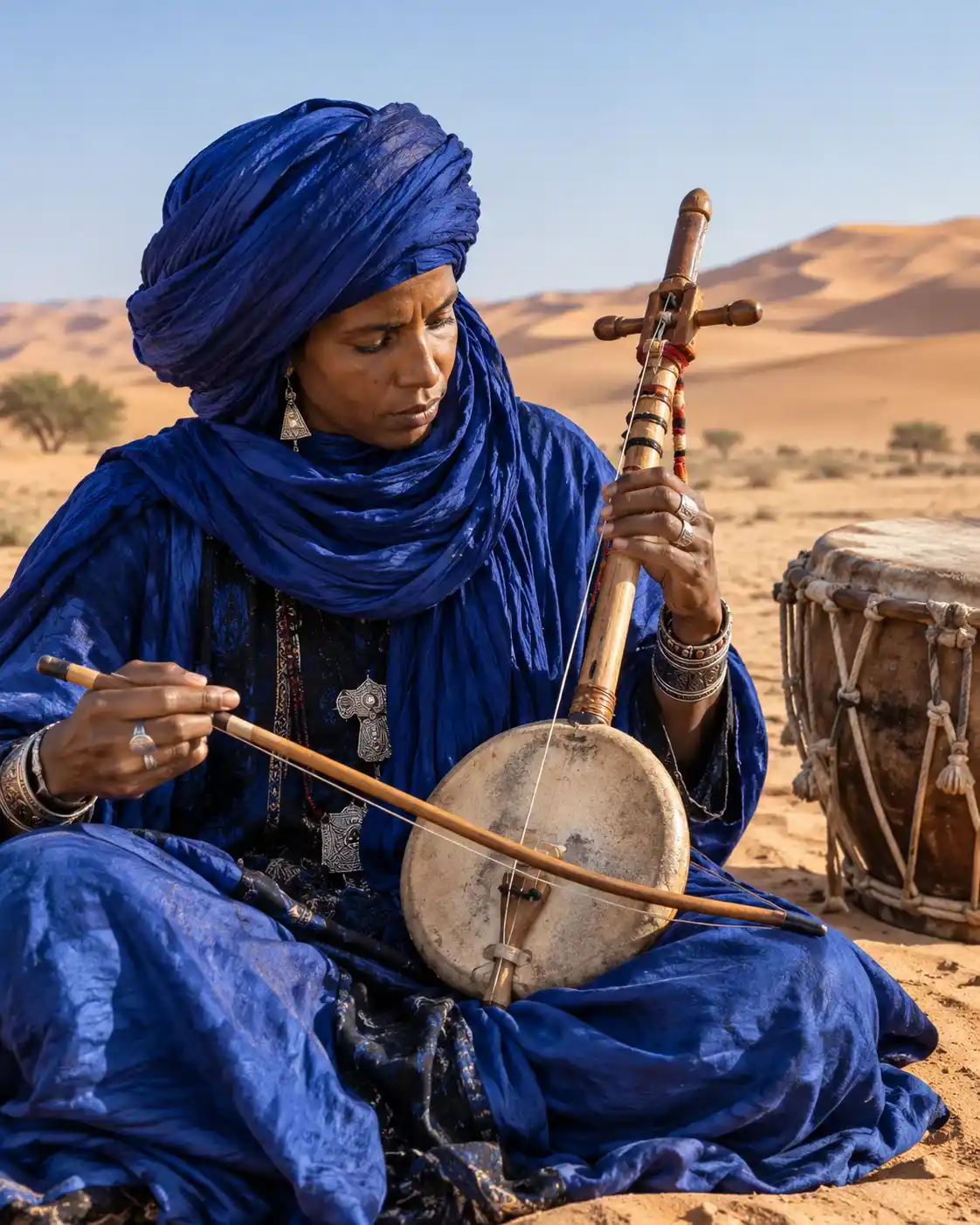
Nomadic Poetry in Motion
Tuareg music is more than just notes and rhythms, it’s a poetic expression of nomadic life. The lyrics, often sung in the Tamasheq language, convey the Tuareg’s experiences, from the vastness of the desert to the challenges of survival. The themes range from love and loss to tales of heroic deeds, mirroring the nomadic lifestyle’s inherent uncertainties and triumphs.
Tinariwen — Pioneers of the Desert Blues
In recent years, the Desert Blues has gained global recognition, thanks in no small part to the band Tinariwen. Formed by Tuareg musicians in the refugee camps of Libya during the 1980s, Tinariwen brought the Desert Blues to international stages. Their music, characterised by hypnotic rhythms and melancholic guitar riffs, captures the essence of the Sahara and the resilience of the Tuareg people. Tinariwen’s musical journey continues to reflect the changing sound of Desert Blues while staying rooted in Tuareg culture.
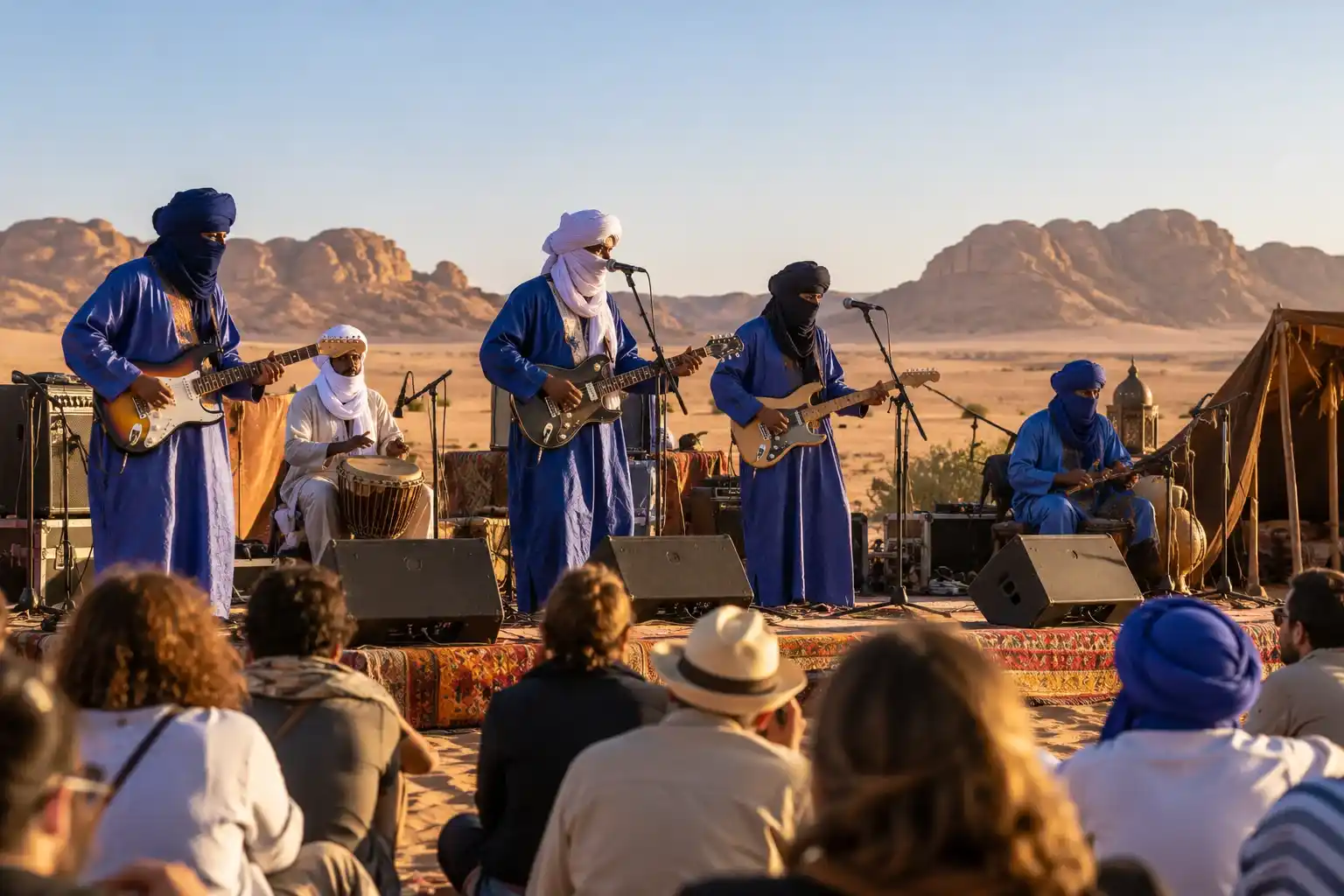
Crossing Borders — Global Impact of Tuareg Music
The haunting allure of the Desert Blues transcends geographical boundaries. Collaborations between Tuareg musicians and artists from around the world have created a fusion of sounds, blending the traditional with the contemporary. These cross-cultural encounters bring the Tuareg narrative to a broader audience, fostering appreciation for the rich culture of the Sahara.
Musical Resilience Amidst Adversity
The Desert Blues not only serves as a cultural cornerstone but also as a tool of resistance and resilience. Tuareg musicians have used their art to address social and political issues, advocating for the rights and recognition of their people. In a region marked by unrest and displacement, the Desert Blues becomes a powerful vehicle for preserving identity and fostering a sense of unity among the Tuareg.
Hear the Desert Blues
The hypnotic guitar riffs and haunting rhythms of Tinariwen bring the spirit of the Sahara to life. Listen to Sastanàqqàm and hear the sound of Tuareg identity, where desert traditions meet the raw energy of the electric guitar.
A Musical Odyssey Through the Sands
As the sun sets over the Sahara, casting hues of orange and gold upon the endless dunes, the Desert Blues continues to echo through the vast expanse. It’s a musical odyssey that invites listeners on a journey through the nomadic landscapes of the Tuareg, where every note tells a story and every rhythm reverberates with the resilience of a people connected to the heart of the desert. The rhythms of the Sahara, carried by the winds, invite us to join a timeless caravan through the soul of North Africa.
Hanan: text3 March 2024
You Might Like This
Loved this one? We picked a few more you might like.


Your voice!
Man, this music got me picturing a desert jam session under the stars. Always amazed how music carries culture across borders. Tinariwen’s journey is just wild. Ever been to a Tuareg concert live? How does it hit different in the Sahara?
Glad you felt that vibe. A desert jam session under the stars is exactly the kind of magic Tuareg music brings. Tinariwen’s journey is unreal. Born from exile, shaped by resistance and now carrying the Sahara’s heartbeat to the world. Never caught a live Tuareg concert myself, but imagine the raw energy of those hypnotic riffs echoing across the dunes. That mix of tradition and rebellion, carried by the wind — it must be something else.
Desert Blues has a raw energy that really connects with the nomadic spirit. It’s amazing how music can carry stories of resilience, struggle and identity across generations. Definitely checking out more from Tinariwen after this read. Thanks!
Glad you enjoyed the read. Desert Blues is pure storytelling through sound — raw, hypnotic and deeply tied to Tuareg identity. Tinariwen is a great start and if you’re into their vibe, you might also like Bombino or Mdou Moctar
The Tuareg Desert Blues has such a deep vibe with its poetic lyrics and hypnotic rhythms that hit different moods perfectly. Tinariwen really brings out that desert energy and their music feels like a journey. 🔥
Absolutely! The way Tinariwen captures the vastness of the Sahara in their sound is truly something special. Their hypnotic guitar riffs and soulful lyrics carry the spirit of the desert, making every track feel like a journey through endless dunes.