

Bali’s Iconic Foods and the Stories Behind Them
The food featured in this article are all possible to enjoy in halal-friendly kitchens and warungs throughout Bali.
First thing you get hit with in Bali isn’t the heat. It’s the grill smoke. Some warung’s already going at 7 am, motorbikes blatting past and someone’s shouting over the spit of hot oil. Step into any street in Bali and your senses just... stop. There’s smoke first, then something sharper. Chilli, maybe coconut husk catching on the grill. There’s no point analysing it. You simply stop and take it in.
This place doesn’t sit still long enough to be just a holiday island. It eats, breathes and moves like a feast. I’ve been coming to Bali for over a decade and discovering the food scene here has been one delicious bonus. Every bite feels like it carries its own little tale, something half ritual and half celebration. Stick around a bit longer and you start to realise it’s not just about taste. There’s something deeper going on. Ritual, community, memory all tangled into it.
Alright, let’s talk about the dishes that truly define Bali. The ones you find at temples, in homes or handed to you in banana leaf on the street. Balinese food lives in every corner of the island, whether it’s something sacred or something you grab on the way home. From here, it pulls you straight into the heart of it. Culture, community and a serious hit of chilli.
Cultural Roots of Balinese Food
People bang on about the spices. Fair enough. But what they miss is the bit underneath: meals here are meant to keep things level. That might sound silly when you read it. But in Bali, that’s simply how things are. What ends up on the plate is tied closely to belief. Harmony matters here. So does ceremony. Even the act of cooking feels like part of something bigger.
Balinese dishes are built around the five essential tastes: sweet, sour, salty, bitter and spicy. But the ingredients? They’re not just for flavour. They’re a nod to the universe’s balance. Add in layers of influence from Indian traders, Javanese courts and centuries of island tradition, and you get a cuisine that’s deeply local yet surprisingly global.
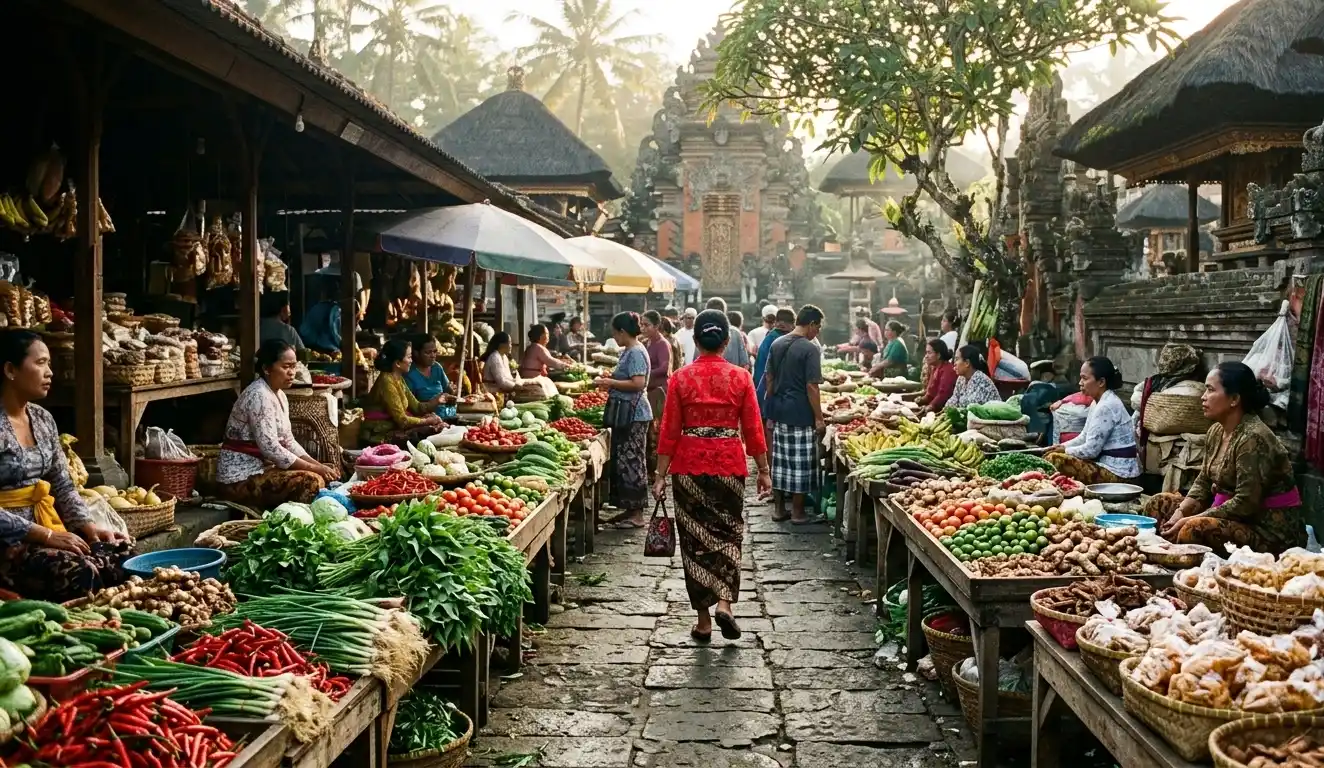
Markets here aren’t just for groceries, they’re cultural archives. Among the chaos of colour and sound, you’ll find the roots of every dish: turmeric-stained ginger, fire-red chillies, fragrant lime leaves and stacks of fresh coconut. It all begins here.
Balinese Food With Ceremonial Roots
You notice it when someone pauses before they eat. Not prayer exactly, but something close. The food here doesn’t feel separate from the ritual. It’s part of the same gesture. During ceremonies, the kitchen transforms into a sacred space where meals are prepared with deep reverence. You can taste that effort in the sauce. It isn’t just about feeding people. It’s a way of keeping their ancestors close, turning a simple lunch into a quiet nod to the past. You taste it most when they’re cooking for the gods. That’s when the food stops being just food.
Take Bebek Betutu, a ceremonial dish where duck is marinated in a mix of turmeric, galangal and candlenut, then slow-cooked until tender and full of flavour. This smoky, spice-laden meat is considered an offering to the gods, a powerful symbol of connection with the spiritual realm. Similarly, Ayam Betutu is the chicken version, prepared the same way, often served during temple feasts. Ayam Betutu appears at funerals, temple feasts and any grand gathering where the act of slow cooking becomes a form of devotion.
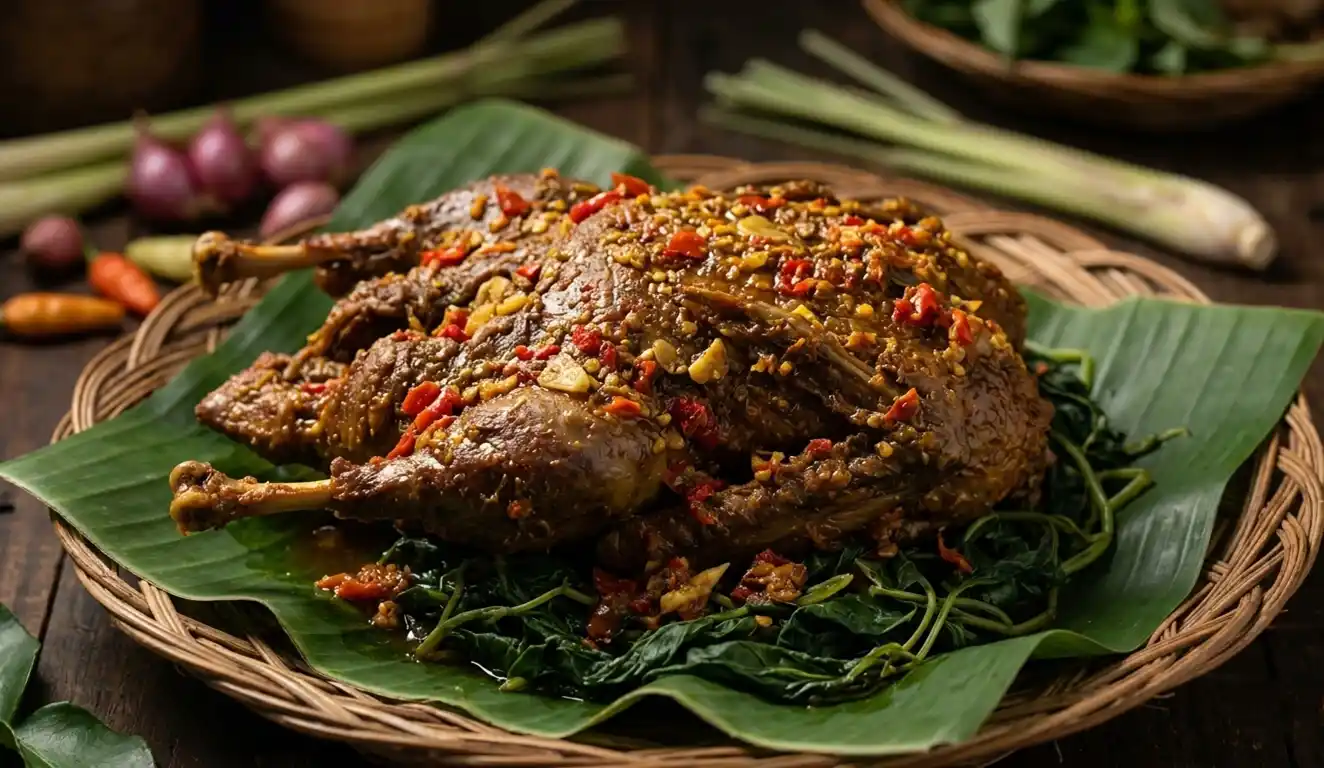
From fire pit to feast. Bebek Betutu in its ceremonial glory.
Sacred flavours. Slow-roasted Ayam Betutu for the gods and guests alike.
Even the Tempe Betutu gets the full treatment. It’s the plant-based version for the modern crowd, but they still wrap it up and cook it with the same reverence they would a ceremonial duck.
Finally, there’s Jukut Ares, a humble soup made from young banana stems. Despite its simplicity, it holds immense cultural and ritual significance, often served in community offerings. It’s the kind of dish that only makes sense when everyone’s gathered around it.
Balinese Story of Ayam Betutu
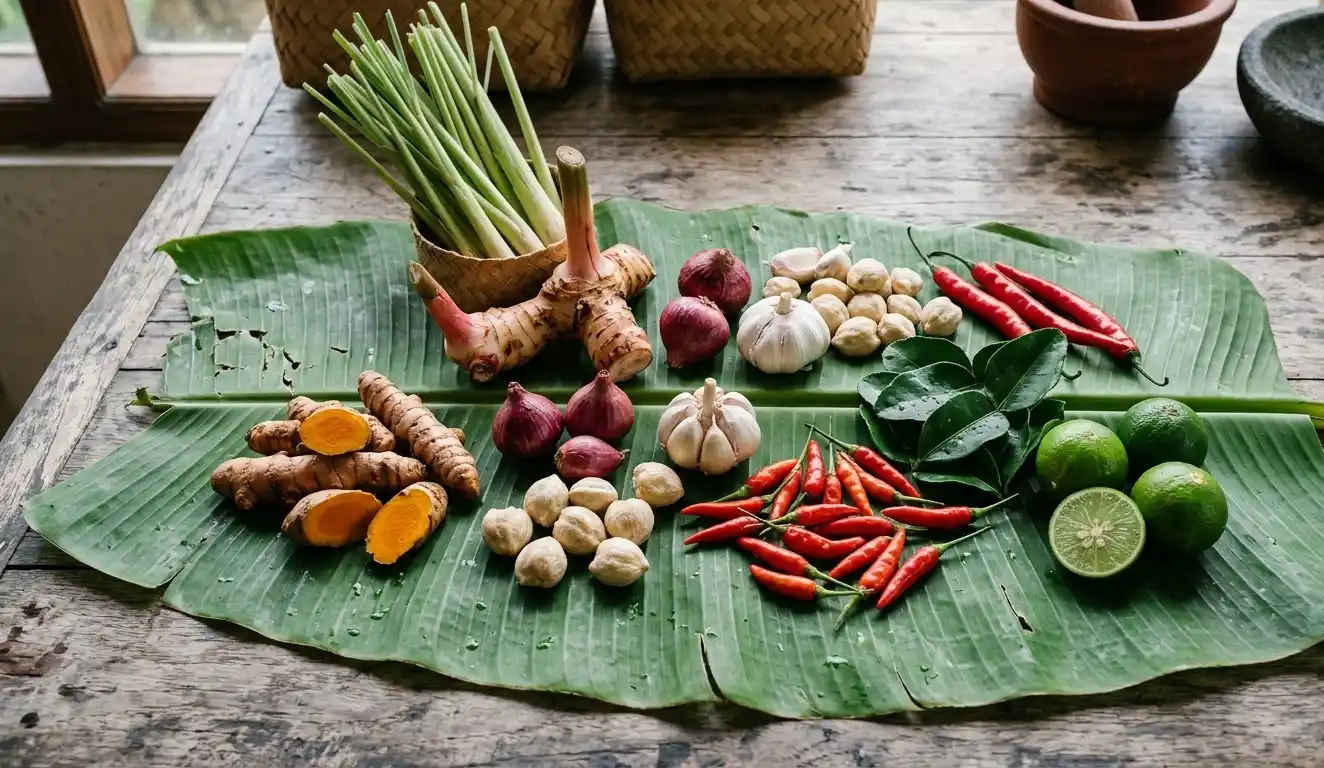
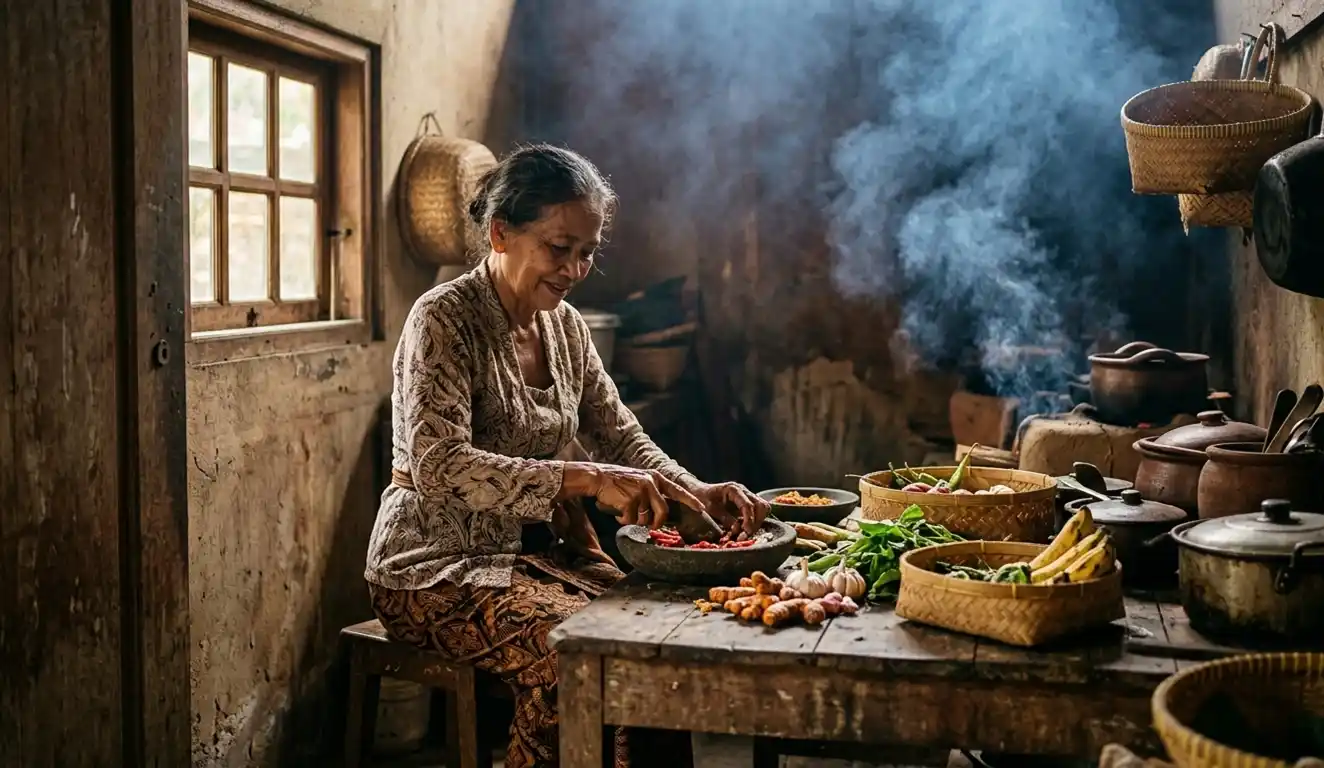
The ritual begins. Roots, herbs and leaves are gathered to awaken the spirit of the dish.
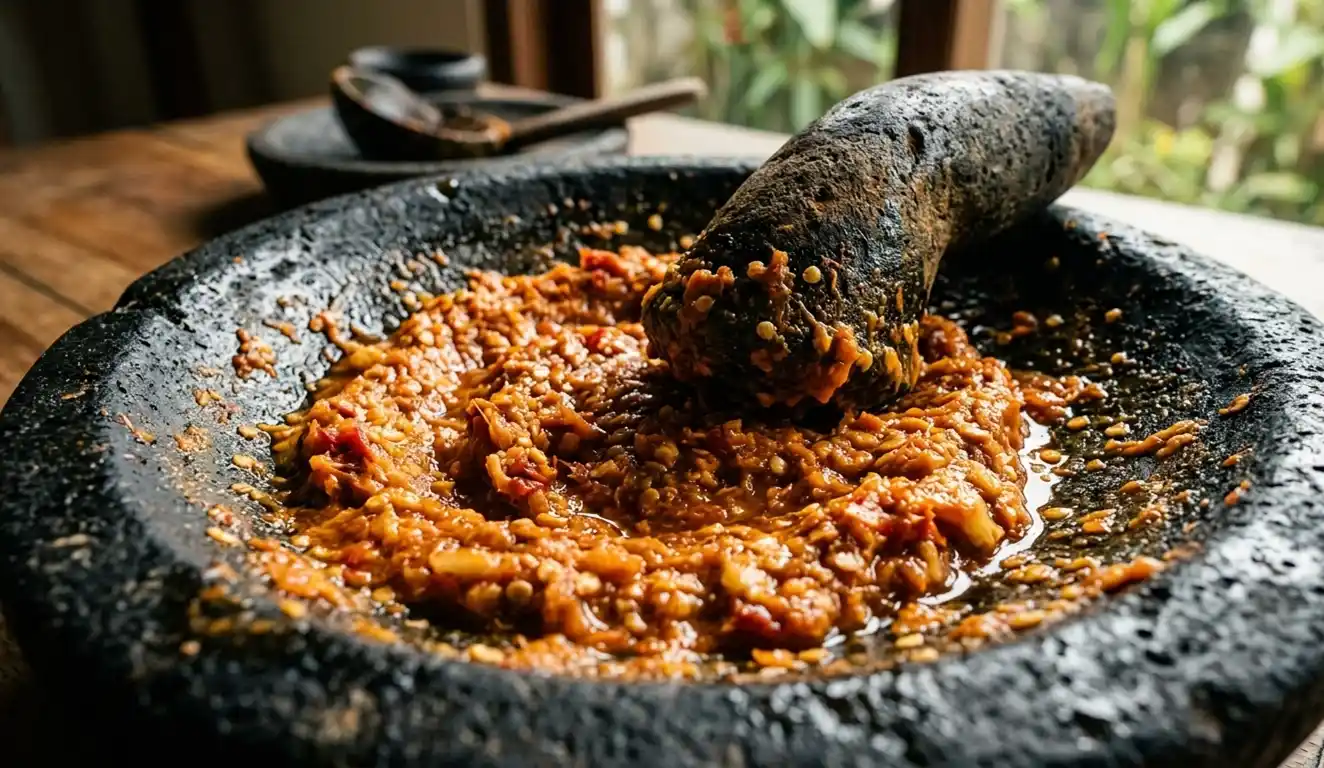
Earth becomes fire. Flavours colliding in rhythm, transformed by hand and stone into sacred intensity.
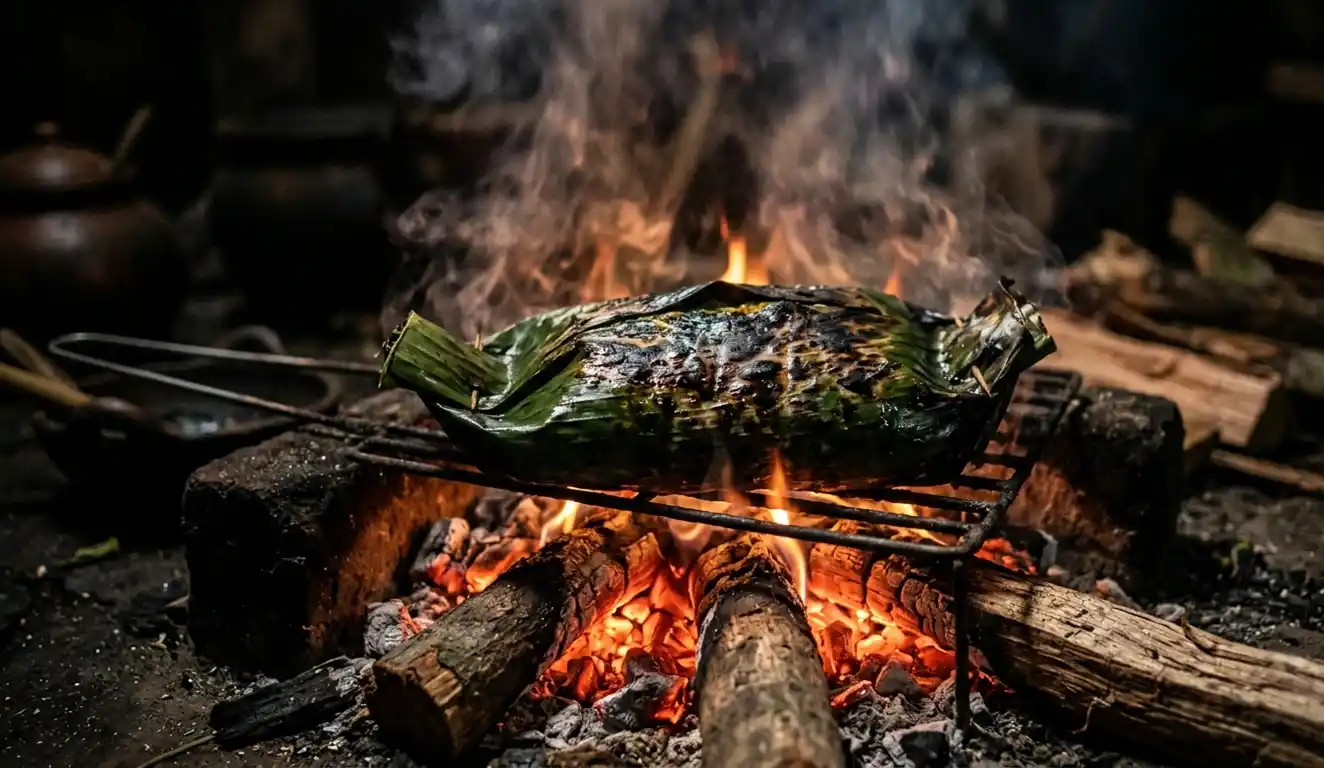
Patience is power. The marinated chicken softens, soaks and surrenders to the heat.
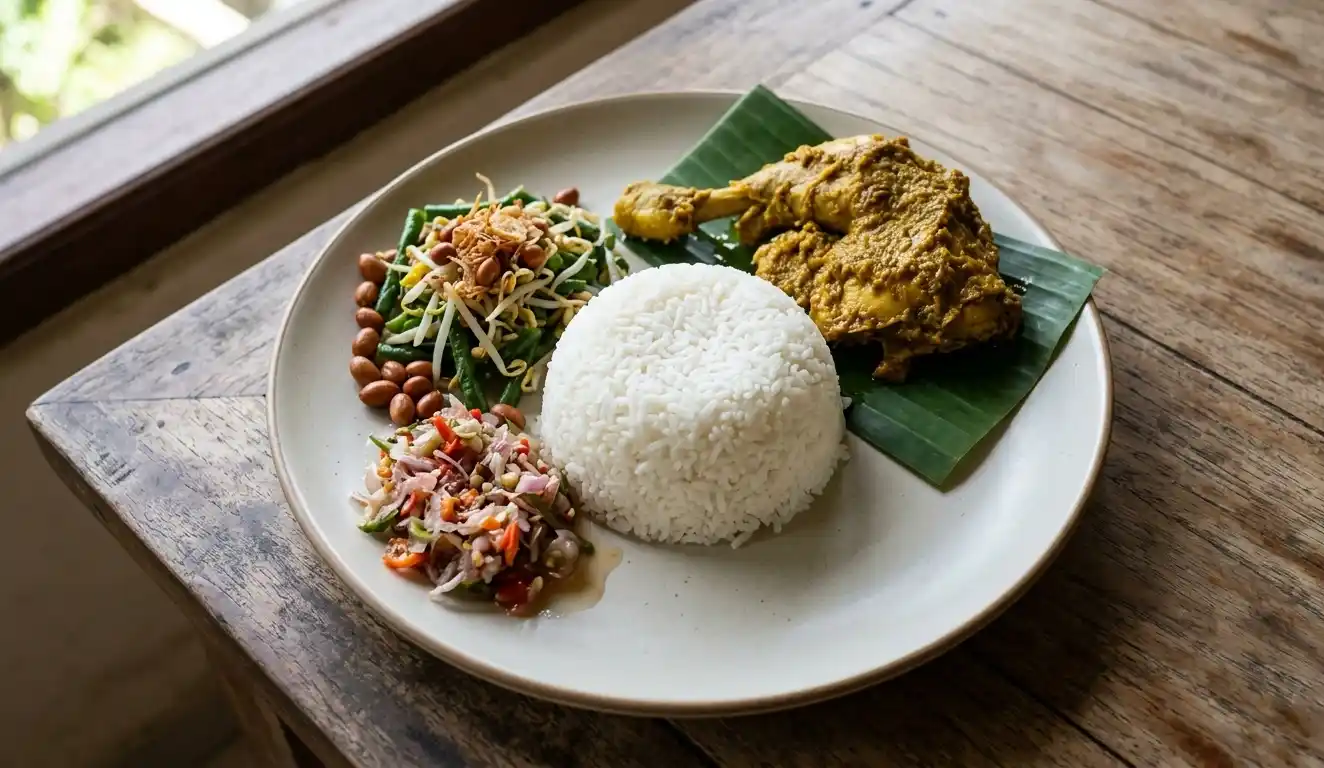
Unveiled at last. A dish infused with devotion, smoke and silence. Bali on a plate.
Inside the Balinese Family Kitchen
At the Balinese family table, food isn’t just about eating. It’s about being together. Imagine the chatter of siblings, the clink of spoons on plates and the scent of something delicious steaming in the corner. That something? Tum Ayam. It’s not flashy, but it’s loved. Comfort food that smells like childhood and tastes like home.
Tum Ayam is chicken finely chopped and mixed with coconut milk, galangal, shallots and a handful of spices. It’s then wrapped in banana leaf like a tiny parcel and steamed until the flavours melt together. Soft, fragrant, with a gentle kick. Blink and it’s gone, especially when everyone’s sitting cross‑legged and helping themselves straight from the kitchen.
No ceremonies, no fancy setting. Just a mat on the floor, laughter and food passed around by hand. In Bali, these are the meals that mean the most. And Tum Ayam? It’s always invited.

Comfort Taste of Balinese Community Life
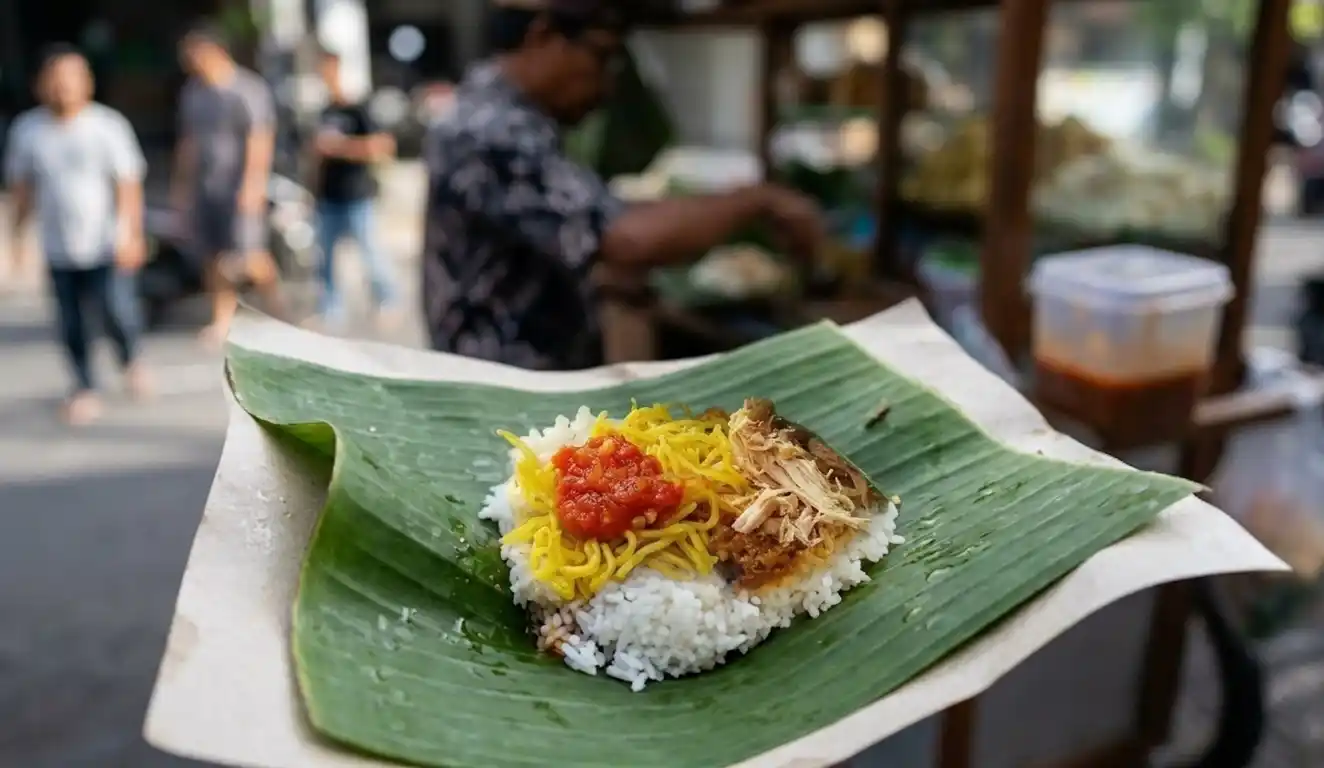
Wander down any street in Kuta or a side road in Sanur in the early morning, and you’ll find someone selling Nasi Jinggo — rice, sambal and small bites, all wrapped in banana leaf. It’s street food gold, sold for just a few coins but packed with personality. Known as Jinggo Rice, it’s not just a breakfast favourite, but also plays an important role in Bali’s cultural and religious ceremonies, such as in funeral rites, birthday celebrations and community meetings.
Tipat Cantok brings the crunch, ketupat (rice cakes) served with vegetables and drowned in spicy peanut sauce. It’s Bali’s version of comfort food, eaten cross-legged on mats during local festivals or casual gatherings. It turns into one of those meals where no one stops talking and the plate empties fast.
Then there’s Sate Lilit Ayam, chicken satay with a twist. Instead of skewers, the spiced minced meat is wrapped around lemongrass sticks and grilled. It comes off the grill smoky and sharp, the sort of flavour that keeps you reaching back for more. Whether sizzling at a roadside stall or served during temple feasts, this dish pulls people together for good food and good times.

The woman selling Tipat Cantok in Ubud barely spoke English. She only watched, checking that I ate it while warm. A quiet kindness.
Bali’s Lively Street Food Culture
Craving a taste of the real Bali? Dive into this video by Jean Voronkova, where the vibrant energy of a Balinese market comes alive. From early morning veggie hauls to sizzling street snacks and colourful spice displays, it feels like standing right in the middle of it, noise, colour and all.
Sweet Taste of Balinese Culture
Celebrations in Bali always come with something sweet. And nothing brings that festive buzz quite like Jaja Uli. You will see these sticky cakes everywhere. They are at the posh weddings, tucked into temple baskets, or just being fought over by kids at a Sunday lunch.
Made from glutinous rice, palm sugar and grated coconut, Jaja Uli is all about texture. The rice is steamed, pressed into shape and often fried until the outside goes golden and crisp. That contrast, crisp on the outside, soft and sticky in the middle, is hard to stop eating. It’s the kind of treat you pass around after prayers, with everyone reaching for seconds.
There’s a special warmth to Jaja Uli, smoky, sweet and deeply nostalgic. Jaja Uli isn’t really about pudding. It’s the bit everyone scraps over at weddings. Sticky, smoky, and it somehow tastes like someone’s mother made it even when she didn’t.

Bali’s Bold Street Flavours in a Bowl
Here’s where things get fiery. No Balinese meal is complete without sambal. These spicy sidekick doesn’t sit quietly on the side. It takes over the whole plate. They’re the heat that brings dishes to life, spooned over rice, grilled fish or anything begging for a punch of flavour. Found in warungs, street carts or tiny bowls on family tables, sambal is everywhere. A non-negotiable part of everyday eating.
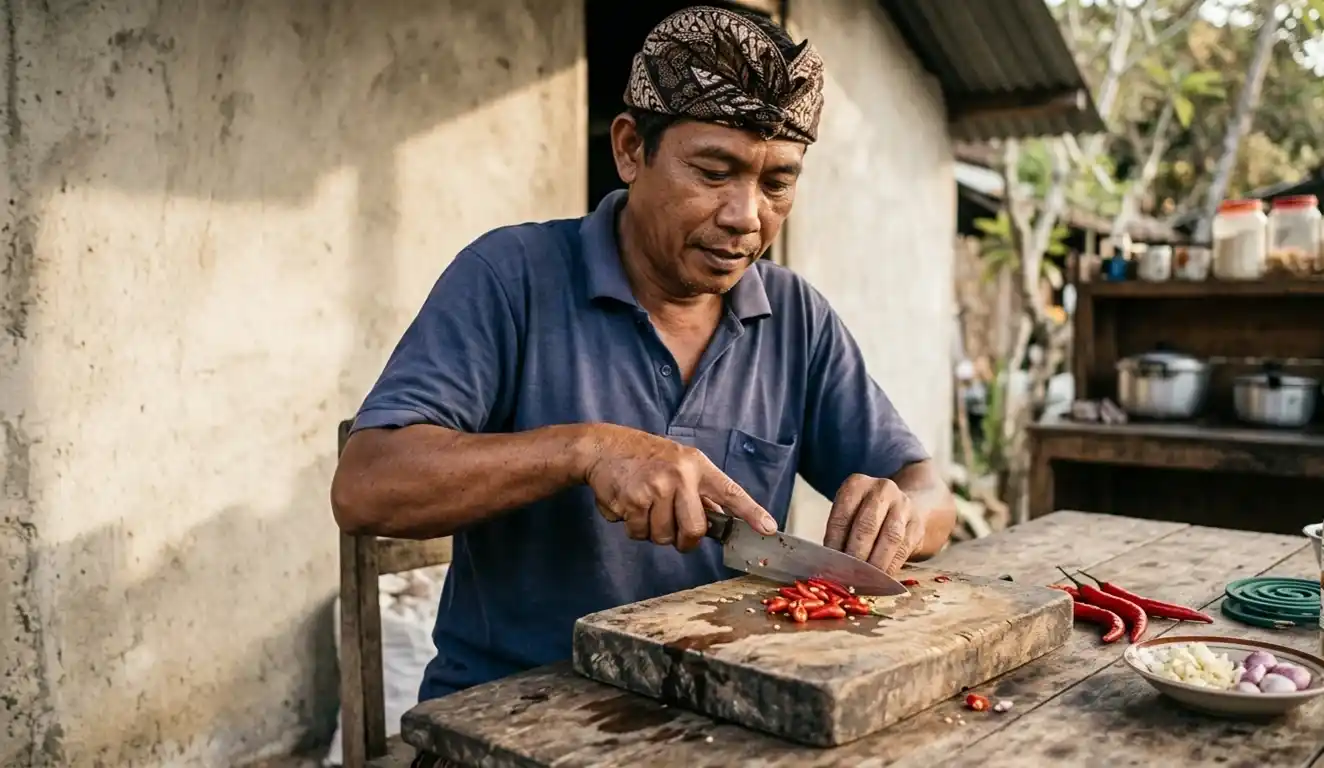
Sambal Matah is raw, wild and totally irresistible. Shallots, lemongrass, lime leaves and chillies, all sliced razor-thin and drenched in hot coconut oil. You can smell it from across the room, zesty, herbal and fiery. It’s tossed together last minute for that signature crunch and served best with grilled seafood and chicken, or even fried tempeh. For Sambal Matah is no cooking required, just a chopping board and bold hands.
Sambal Embe turns up the umami. Garlic and shallots are fried until golden, then mixed with chopped chilli and bubbling oil. It’s savoury, slightly sweet and downright addictive. The kind of sambal you eat with rice and a spoon. You’ll find it at home dinners or tucked into banana-leaf lunches. Simple to make, but full of depth. One taste and you’re hooked.
And Sambal Bongkot? That one’s the wild card. Featuring torch ginger flower (bongkot), it hits with a floral, citrusy zing that dances on your tongue. Locals love it with fresh vegetables. It’s funky, fragrant and unforgettable. A fiery love letter to Balinese spice.
Why Every Bite in Bali Tells a Story
The hiss of meat on the grill, the rustle of banana leaves, the deep scent of sambal. These aren’t just sensations. They’re stories. You won’t remember it for how it looks on a plate. You remember who you shared it with and where you were sitting. Every dish tells a story of time, place and tradition. That smoke sticking to your clothes? It’s more than just burnt coconut. It’s the same smell that has hung over these streets for hundreds of years.
Balinese food goes beyond flavour. It carries memory with it and a sense of culture that lingers long after you’ve eaten. Each bite, whether wrapped in banana leaves or fryed along the streets, is a thread in a much larger story. You taste it in temples, kitchens and warungs. It’s in the air, in the vibe, in the soul of the island. From the offerings placed in sacred spaces to the meals shared among friends and family, the connection to the land, the people and the unseen is felt in every morsel.
I still remember meals from a decade ago that cost almost nothing. That’s the truth of eating in Bali. You don’t plan. You arrive somewhere by chance and feel lucky for it.
Hanan: text5 May 2025, updated 6 May 2026
You Might Like This
Loved this one? We picked a few more you might like.

Your voice!