
Turkish Baklava: A Golden Stack of Sweetness
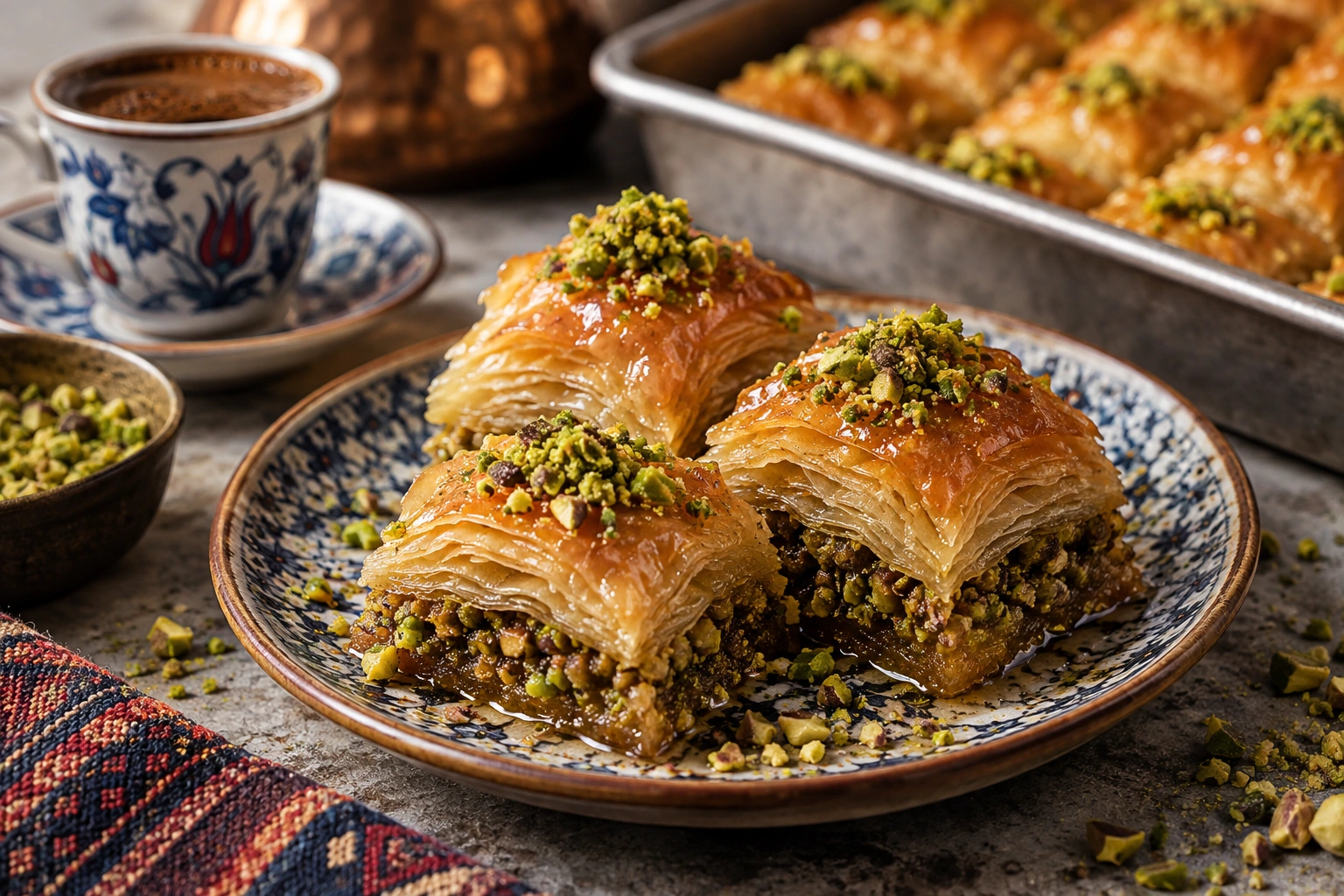
There’s something seriously satisfying about a good piece of Turkish baklava. You crack through that golden top and the pastry gives way with a delicate crunch, revealing layers of buttery filo and finely chopped nuts underneath. Then comes the syrup — sweet, fragrant and just enough to bring the whole thing together.
Baklava is more than just a dessert in Turkey. It has long been part of celebrations, family gatherings and everyday moments when something sweet is called for. Pistachios are especially popular, although walnuts are also widely used.
And despite its impressive appearance, making baklava at home is much easier than it looks. There’s no complicated pastry dough to make here. The real trick is patience: butter those filo layers properly, bake them until beautifully golden and give the finished baklava enough time to absorb the syrup.
Ready? Let’s make it.
Turkish Baklava
- Serves: 8–10
- Preperation time: 30 minutes
- Cooking time: 40–45 minutes
- Resting time: At least 4 hours
- Total time: About 5 hours
Ingredients
For the Baklava
- 250 g filo pastry
- 150 g unsalted butter, melted
- 200 g pistachios or walnuts, finely chopped
- 1 tablespoon sugar
- ½ teaspoon ground cinnamon, optional
For the Syrup
- 200 g granulated sugar
- 150 ml water
- 1 tablespoon lemon juice
Method
1. Start with the syrup
Put the sugar and water into a small saucepan and bring to a gentle boil. Reduce the heat and simmer for 8–10 minutes. Add the lemon juice, simmer for another minute then remove from the heat.
Set the syrup aside and let it cool completely.
2. Get the filo ready
Preheat your oven to 180°C and lightly butter a baking dish.
Unroll the filo pastry and cover it with a clean, slightly damp tea towel. Filo dries out quickly, so keep it covered whenever you're not working with it.
Place one sheet into the baking dish and brush it generously with melted butter. Add another sheet and butter again. Keep going until you’ve used roughly half of the pastry.
3. Bring on the nuts
Mix the chopped pistachios or walnuts with the sugar and cinnamon, if you’re using it.
Spread the nut mixture evenly over the pastry, giving you a generous layer right through the centre.
4. Build the rest
Layer the remaining filo sheets on top, brushing each one generously with melted butter before adding the next.
Finish with a final layer of filo and give the top a good coating of butter.
Now grab a sharp knife and cut the baklava into squares or diamonds. Doing this before baking makes life much easier later.
5. Into the oven
Bake for 40–45 minutes, or until the top is deeply golden and beautifully crisp.
This is the moment when the kitchen starts smelling dangerously good.
6. The syrup moment
Take the hot baklava out of the oven and immediately pour the cold syrup evenly over the entire surface.
You’ll hear that satisfying sizzle as the syrup hits the hot pastry. Let it settle into all those layers.
Now comes the difficult part: leave it alone.
Allow the baklava to rest for at least 4 hours, preferably overnight. This gives the syrup time to soak through the layers while the filo keeps some of its delicious crunch.
How to Serve Turkish Baklava
Serve the baklava at room temperature, cutting along the lines you made before baking. Finish with a few extra chopped pistachios if you want that classic green-and-gold look.
And don’t stop at dessert. Turkish baklava is brilliant alongside a small cup of strong Turkish coffee. The coffee’s bitterness cuts through the sweetness of the syrup and makes the whole combination work beautifully.
The Little Tricks That Make a Difference
Keep the filo covered. Once exposed to air, it dries out surprisingly fast.
Butter every layer. It might feel like you’re using a lot, but that butter is what creates those crisp, golden layers.
Cold syrup, hot baklava. Pouring the cooled syrup over the freshly baked pastry helps it soak in while keeping the texture from becoming too soft.
Give it time. Baklava needs several hours to settle. If you can wait until the next day, even better.
Keep some texture in the nuts. Chop them finely enough to spread easily but don’t turn them into a powder. Those little crunchy pieces are part of the fun.
Hanan: text10 September 2026
You Might Like This
Loved this one? We picked a few more you might like.

Your voice!