
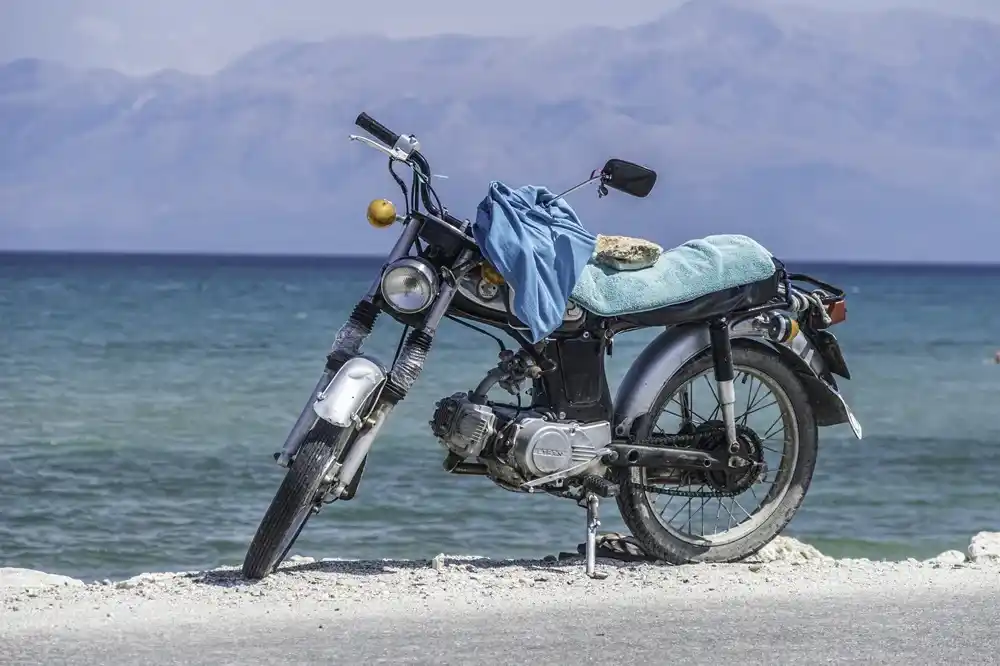
Corfu: A Greek Paradise in the Ionian Sea
Corfu has been delighting visitors for thousands of years. This green island was at the time of the Romans already a popular holiday resort and now it’s still one of the busiest spots in the Mediterranean. This Greek island was mine for a week, with a camera and motorcycle, and I enjoyed the kindness and hospitality of its inhabitants.
What I first noticed, was that there were still villages where extreme poverty still prevails, despite the current Europe and that tourism is strongly present in Corfu. What did I learn the most? Appreciation for Greek cuisine. Meanwhile, the Greek dishes are in my top three and they regularly come to my table.
The Island of Corfu
Corfu is not that big. The island is only 58 kilometres long and 27 kilometres wide. Of the seven Ionian islands, Corfu is the most northerly. Roughly Corfu falls into three parts: the mountainous north, the hilly middle and the low south.
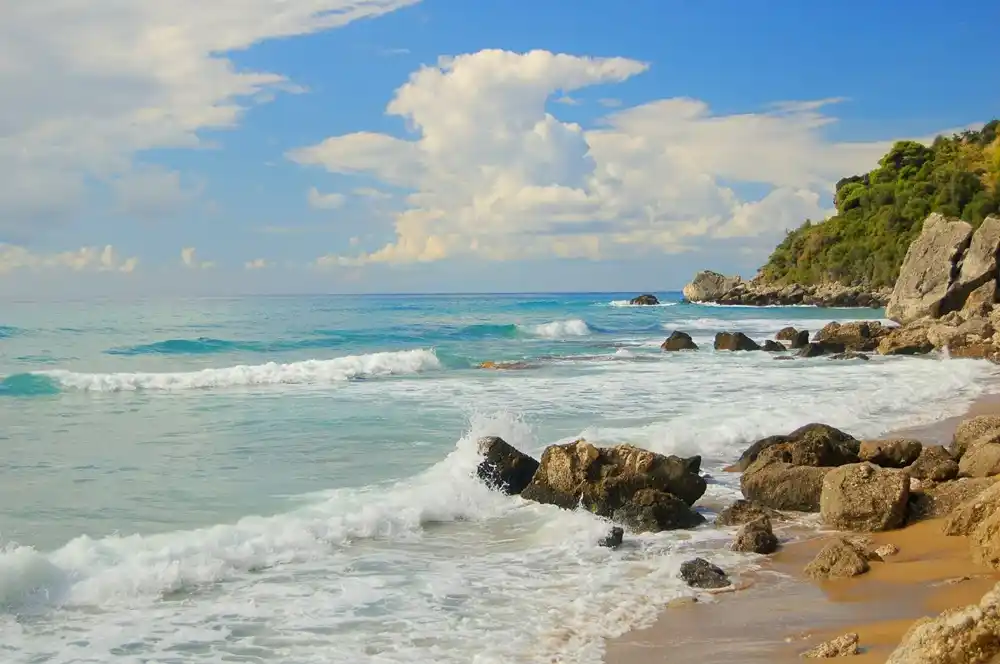
A large part of the coast consists of sand or pebbles. As a result, there are beautiful long beaches, particularly west of the Antinioti Lagoon on the north coast and along Lake Korrission in the southwest. There are also vast cliffs, especially on the west coast north of the Ermónes holiday resort. Between Sidari and Perouládes in the north you will find some steep rocks streaked with layers of clay and sand.
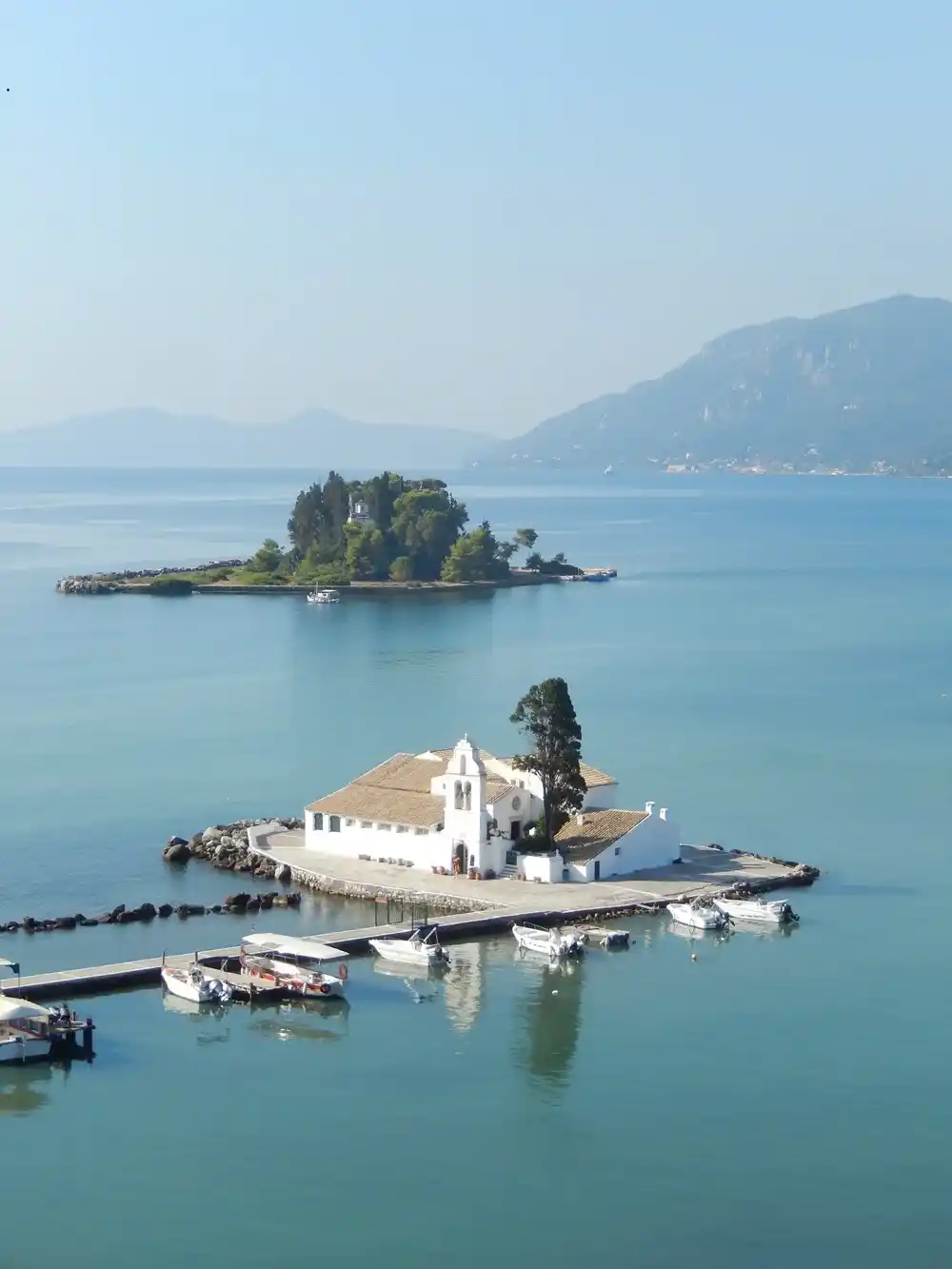
Mount Pantokrator
This mountain with its 906 metres is not very high compared to the peaks on the Greek mainland or those of some other islands, yet it takes a lot of effort to reach the top. The reward is a magnificent view over the bay to Corfu City in the south, over the strait to Albania in the east and even to the small islands in the far northwest off the coast of Corfu. In the south you might even see the islands of Paxos and Antipaxos and is claimed to be seen on a clear day even the Italian mainland. Due to the humid and warm climate, the slopes in the spring would be covered with a thick carpet of flowers, including many different orchids. I was there in the month of September, so I couldn’t see.
The top of the mountain is less than 3 kilometres away from seaside resorts such as Nissáki and Barbáti. Because of this you realise that the slopes rise steeply behind the beaches and which an impressive environment is offered by the mountain. The road to the top is rough and dusty. Although a car with four-wheel drive will come up, the regular visitor is advised to leave the car in the village of Períthia, just under the top, and to take the rest of the climb on foot. With a very low speed I came all the way up with my motorcycle.
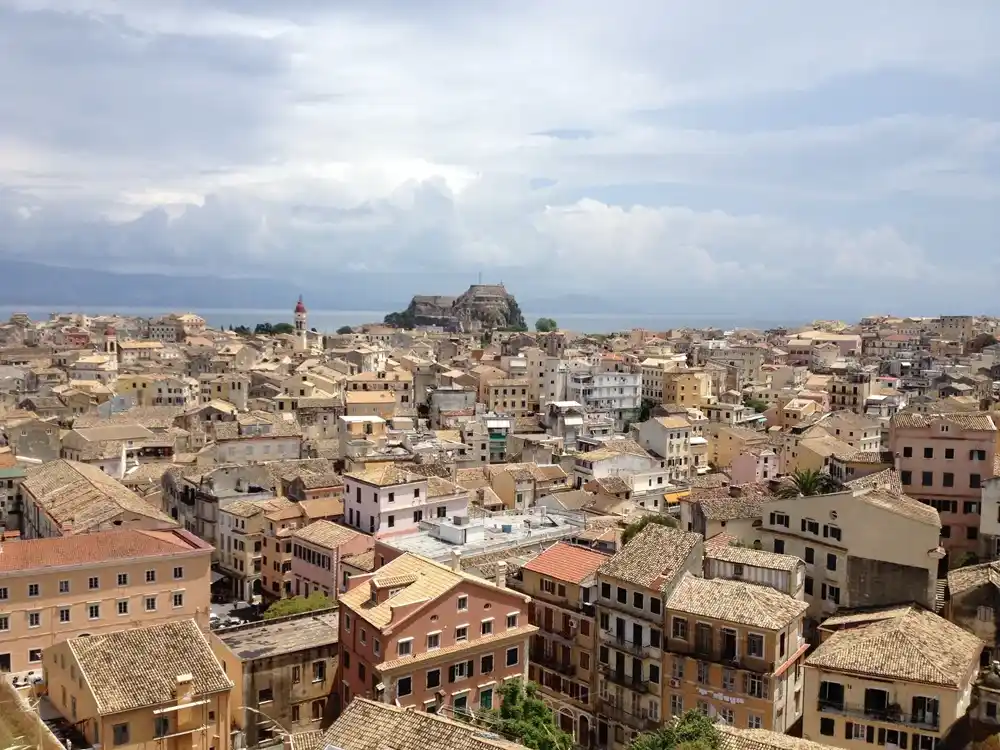
Corfu City. ©Pixabay
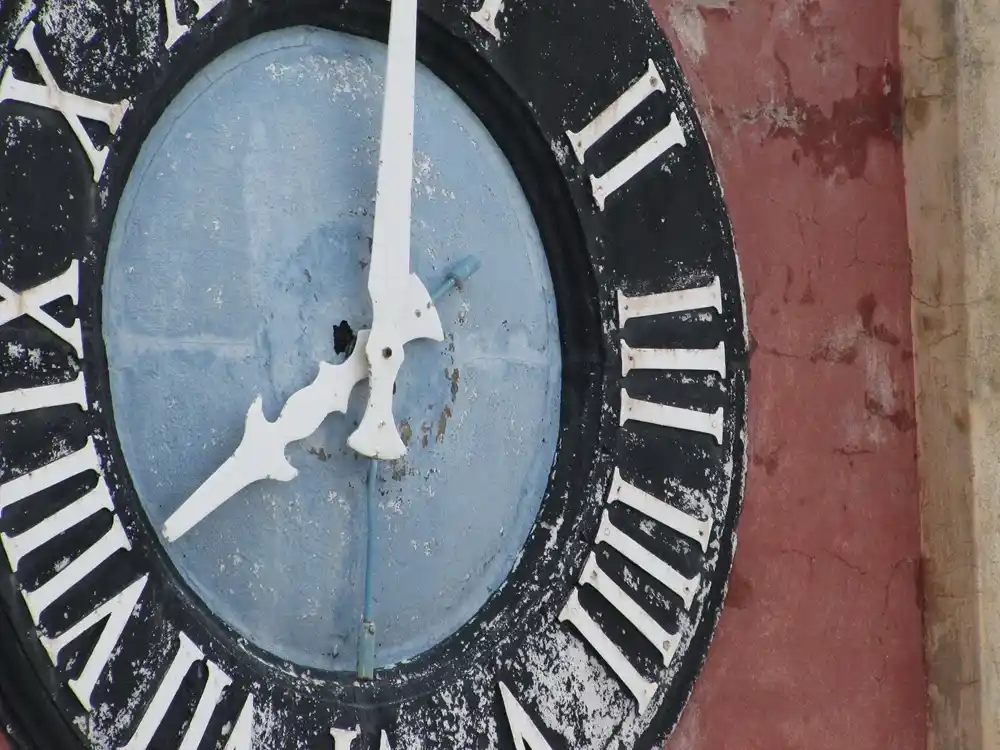
Old clock in Corfu. ©Pixabay
Cuisine
Althought the cuisine of Corfu is very similar to that of the rest of Greece, Corfu’s culinary scene is a Greek gastronomic adventure. Corfu has two specialties which are on the menu in almost every restaurant. Sofríto is a veal stew in a white sauce of garlic, onion, pepper, wine vinegar and everything else that the chef puts into it. Same for pastitsáda, another specialty of the island — veal in tomato sauce with pasta. The veal is sometimes replaced by beef, the pasta can be of any kind and the sauce depends on the mood of the chef. So, there is a lot of interpretation of the dishes possible. And moussaka, one of the best dishes of Greece, but in Corfu I was eating the best ever.
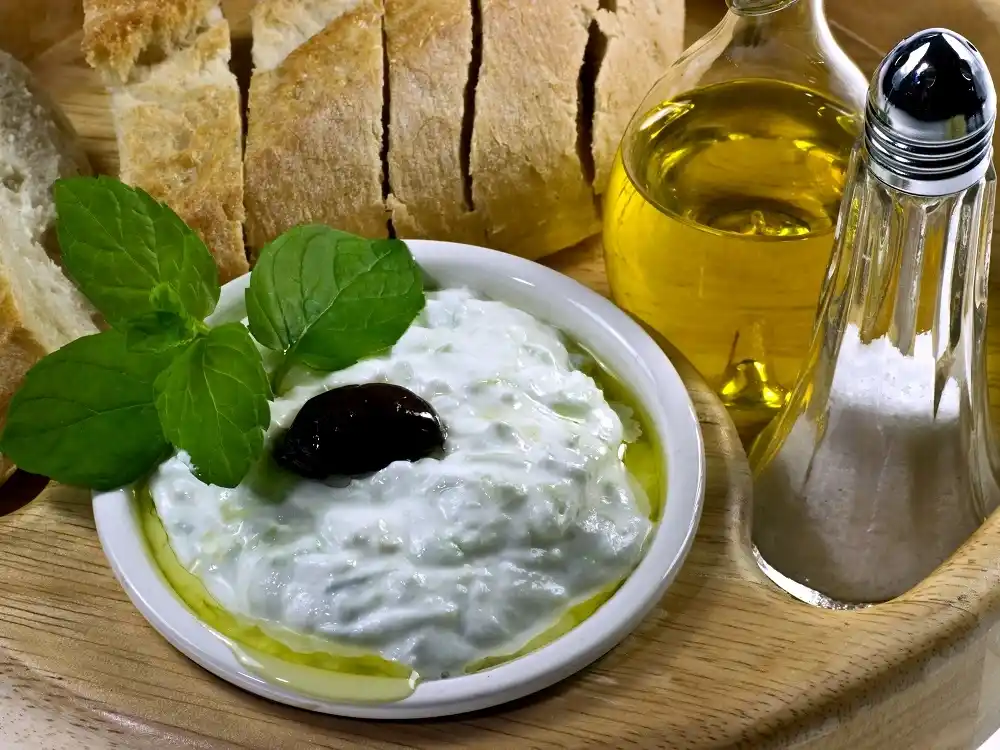
Less common, but worth it if you come across, is bourdéto, a stew of white fish, onion, olive oil and red peppers. I learned to eat tzatziki, a dip of cucumber, yogurt and garlic, and bread with salt and litres of olive oil. Almost every restaurant serves tzatziki as an extra dish with the meal.
Climate
Corfu has a very pleasant climate so many northern Europeans have settled on the island. In the middle of summer, the temperature is generally around 31°C and it is pleasantly warm from April to November — in May the average temperature is about 20°C. When it is high summer you can expect eleven to twelve hours of sunshine a day and even in December the average is still three hours a day. January and February are the coldest months, sometimes there is even frost and snow.
Hanan: text31 March 2012, updated 22 January 2019
You Might Like This
Loved this one? We picked a few more you might like.

Your voice!